
From Clinical Need to Proof of Concept: Ontogen Intern Takes on a Trauma-Care Challenge


Created Date
September 23, 2026
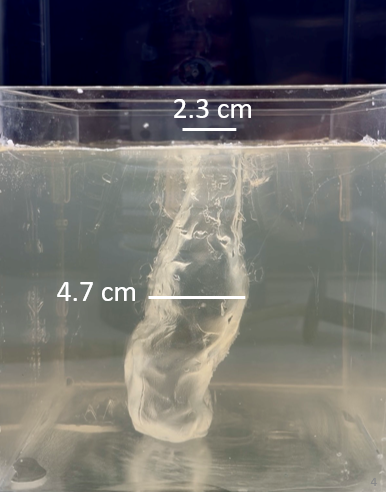
Severe bleeding following penetrating trauma can be extraordinarily difficult to control. A wound may appear small at the surface while extending deep into the body along an irregular path. Bleeding can occur at multiple locations within that path, beyond the reach of conventional external compression and difficult for clinicians to visualize or access.
During the summer of 2026, Ontogen R&D Engineering Intern Meryl McKenna worked alongside Ontogen’s engineering team and a clinical collaborator to explore this challenging unmet need. The goal was to determine whether a new medical-device concept could offer clinicians another option for temporarily managing bleeding within complex penetrating wounds.
The project took the Ontogen team through the core stages ofearly medical-device development: understanding the clinical problem, studying existing solutions, translating clinical feedback into engineering requirements, evaluating potential concepts, constructing prototypes, and testing a working proof of concept.
Starting with the clinical need
Rather than beginning with a predetermined design, the project started by examining the realities of the clinical environment.
Penetrating wounds can vary widely in depth, diameter, direction, and internal geometry. Tissue damage and fragmentation may make the wound path even more unpredictable. Any device intended for this setting would need to accommodate that variability while remaining fast and intuitive to use during a time-sensitive procedure.
The team also identified several competing requirements. A potential solution would need to reach areas where direct pressure cannot be applied, provide a controlled intervention throughout an irregular wound tract, and remain stable during use. At the same time, it should minimize additional tissue disruption and avoid interfering with clot formation during removal.
Those requirements created a difficult engineering problem: the device needed to be adaptable without becoming unpredictable, effective without becoming traumatic, and simple enough to use under pressure.
Exploring the solution space
The Ontogen team reviewed current and emerging approaches to controlling bleeding in penetrating wounds. These included conventional wound-packing methods, flowable hemostatic materials, and several technologies under development.
Each approach offered potential benefits, but also introduced limitations. Some materials could conform to irregular spaces but raised concerns about control, removal, or interaction with the body. Other approaches could provide localized treatment but might not adequately address wounds with highly variable geometry.
This early research helped the team distinguish between ideas that were theoretically promising and those that were practical enough to evaluate within the scope of the project. The work ultimately informed a prototype direction intended to provide a controlled, adaptable treatment interface within a wound tract.
Building to learn
The next step was not to create a finished medical device. Instead, the team built a functional benchtop prototype that could answer the project’s most important early feasibility questions.
Could the concept be introduced into an irregular wound path? Could it be activated in a controlled manner? Could a user maintain control throughout the procedure? And, importantly, removed without unnecessary disruption?
The Ontogen team assembled an early proof of concept and developed a representative operating workflow. Building the prototype exposed practical issues that could not have been fully understood from drawings alone, including connection arrangements, user interaction, preparation steps, and the transition between deployment and removal.
Each issue became an opportunity for iteration. The prototype evolved not simply to look more complete, but to make the concept easier to evaluate and to reveal which design questions should be addressed next.
Creating a meaningful test model
To assess the prototype, the team also created a tissue-mimicking benchtop model representing the soft-tissue environment surrounding an irregular penetrating wound. The model included wound paths with varying depths and geometries, allowing the team to observe how the concept behaved under more representative conditions than a simple straight channel.
Testing demonstrated the intended sequence of placement, controlled activation, and removal. The prototype could be navigated through the simulated wound path, operated through the planned workflow, and extracted.
These results were not intended to establish clinical effectiveness or validate a final design. They did, however, demonstrate that the underlying workflow was mechanically feasible and worthy of further development.
Just as importantly, testing revealed clear areas for improvement. Future iterations could simplify user controls, reduce manual preparation, improve ergonomics, and further integrate supporting treatment functions. These findings turned the prototype into more than a demonstration—it became a practical roadmap for the next phase of engineering.

.png)


.svg)
.svg)
